Sports injuries are not limited to professional athletes. Muscle strains, joint sprains, tendon pain and training-related problems can affect runners, gym users, cyclists, footballers, padel players and anyone who exercises regularly.
Some symptoms improve after a short period of modified activity. Others continue, restrict movement or return when training resumes. Sports physiotherapy in Dubai focuses on assessing these problems, restoring physical capacity and preparing the person for the demands of their activity or sport.
What Is Sports Physiotherapy?
Sports physiotherapy focuses on exercise-related injuries, movement limitations and rehabilitation for physical activity. It can support professional athletes, recreational players, runners, cyclists, gym users and adults returning to exercise after injury or surgery.
A sports physiotherapist may assess strength, movement control, balance, training load and the demands of the person’s sport. The programme should match the individual.
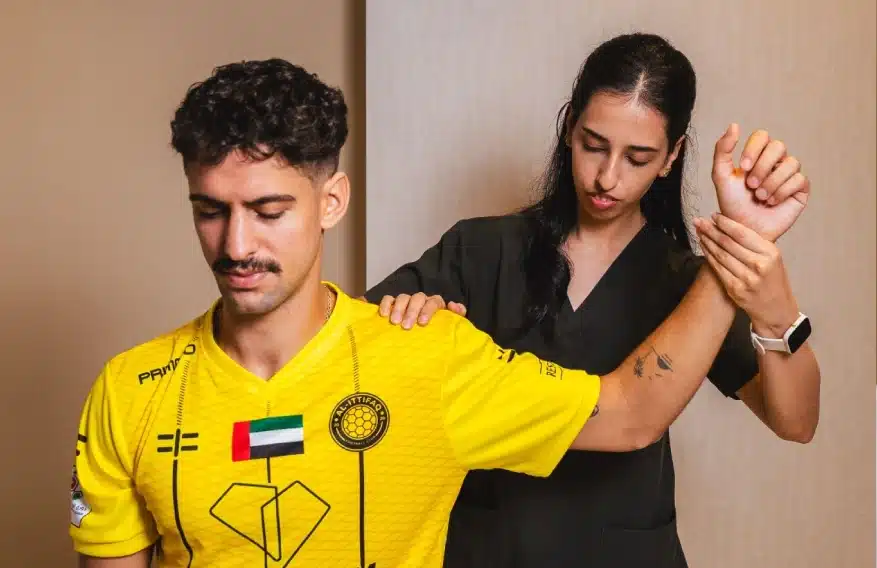
FISIO’s Sports Recovery service in Dubai provides assessment and rehabilitation support for athletes, gym users and physically active adults.
Sports Physiotherapy, Sports Recovery and Sports Massage
These services may overlap, but they are not the same.
| Service | Main purpose |
| Sports physiotherapy | Assessment and rehabilitation of pain, injury, weakness or movement limitation |
| Sports recovery | Supporting recovery between training sessions or competitions |
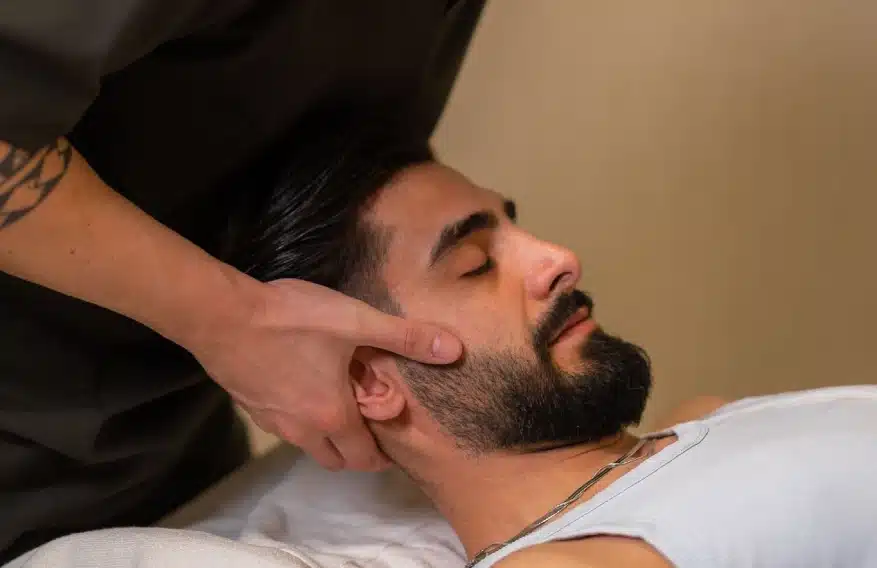
| Sports massage | Hands-on treatment that may temporarily support comfort or mobility |
| Return-to-sport rehabilitation | Progressive preparation for the demands of a specific sport |
Sports massage may form part of a wider plan, but it does not replace injury assessment, strengthening or sport-specific rehabilitation. Persistent instability, weakness or reduced function may require structured physiotherapy rather than recovery treatment alone.
Is It Exercise Soreness or a Sports Injury?
Delayed muscle soreness commonly develops after unfamiliar or demanding exercise and usually settles gradually.
An injury may be more likely when symptoms are:
- Sharp or sudden
- Linked to a twist, fall, landing or impact
- Associated with swelling or bruising
- Affecting joint stability
- Restricting normal movement or causing weakness
- Preventing weight-bearing
- Returning whenever training resumes
- Becoming progressively worse
An assessment may be appropriate when symptoms affect normal movement or prevent a gradual return to activity.
When Should You Book a Sports Physiotherapy Assessment?
Consider booking an assessment when:
- Pain has not improved after reasonable activity modification
- Swelling remains after an injury
- A joint feels unstable or repeatedly gives way
- Normal movement or strength has not returned
- Training repeatedly triggers the same symptoms
- You have changed your technique because of pain
- You are returning to sport after surgery
- You are unsure how to progress exercise safely
Assessment can clarify the problem and determine whether physiotherapy or medical referral is appropriate.
When Does a Sports Injury Require Urgent Medical Assessment?
Sports physiotherapy does not replace emergency or specialist medical care.
Seek urgent medical assessment if:
- A joint or limb appears deformed
- You cannot walk or place weight on the injured area
- Pain is severe or rapidly worsening
- There is major swelling, bruising or loss of sensation
- The hand or foot becomes unusually pale or cold
- There is an open wound or suspected fracture
- Weakness is rapidly progressing
- The injury involved significant force
- You suspect a head, neck or spinal injury
If concussion is suspected, the athlete should stop playing immediately and should not return on the same day. Return to activity should follow guidance from an appropriately qualified healthcare professional.
What Happens During the First Sports Physiotherapy Appointment?
The first appointment should begin with a detailed discussion rather than a standard treatment routine.
The physiotherapist may ask about:
- How and when the injury occurred
- Pain, swelling, bruising or instability
- Previous injuries or surgery
- Current training and recent load changes
- The demands of the person’s sport
- Short- and long-term goals
The physical assessment may include range of motion, strength, joint mobility, balance, walking or running mechanics, and sport-related movements such as squatting, jumping or changing direction.
The findings help determine whether rehabilitation can begin or medical review is needed.
FISIO’s broader physiotherapy services in Dubai include individual assessment and rehabilitation planning for pain, movement problems, injuries and post-operative recovery.
What Can Sports Physiotherapy Include?
The plan depends on the injury, healing stage and activity goals. Not every patient needs every treatment.
Education and Training Modification
The physiotherapist may explain which activities can continue, which should be reduced and how training can be modified without stopping all movement unnecessarily. Changes may involve distance, intensity, resistance, exercise selection, jumping volume or recovery periods.
Pain, Swelling and Mobility Management
Early rehabilitation may address pain, swelling and restricted movement. Graded exercises may be used to restore mobility without forcing the injured area beyond its current tolerance.
Progressive Strengthening
Exercises may target the injured area and nearby muscles that support movement and control. Load should increase according to the person’s response and capacity rather than time alone.
Balance and Movement Control
Balance, coordination, landing and deceleration work may be relevant after lower-limb injuries. The purpose is to rebuild control during the movements required by the person’s sport.
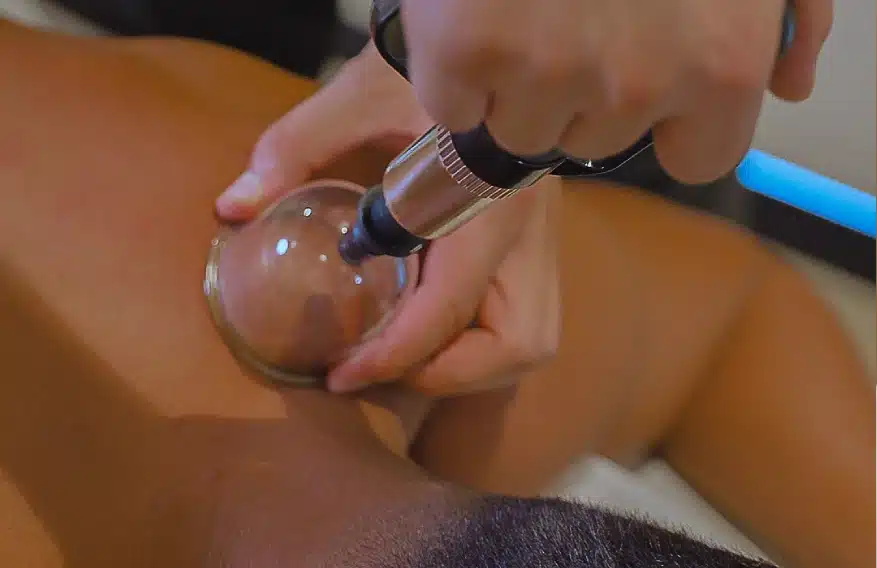
Manual Therapy, Taping and Recovery Treatments
Hands-on techniques, taping or recovery treatments may sometimes support short-term comfort, movement or awareness. They should not be presented as repairing a torn structure or preventing all future injuries.
Sport-Specific Rehabilitation
Later rehabilitation may include:
- Running and sprinting
- Jumping and landing
- Cutting and changing direction
- Throwing or kicking
- Racquet movements
- Cycling load
- Lifting technique
- Contact preparation
What Are the Main Sports Rehabilitation Stages?
Sports rehabilitation is not always linear. Symptoms, surgical restrictions and individual progress can affect the pace.
| Stage | General focus |
| Initial assessment | Identify the injury, limitations, goals and referral needs |
| Early management | Address pain, swelling, protection and restricted movement |
| Movement restoration | Rebuild comfortable mobility and basic function |
| Strength development | Restore strength, endurance and control |
| Sport-specific preparation | Introduce running, jumping, agility or sport-related skills |
| Return-to-sport assessment | Evaluate readiness for training and competition |
Progression should consider symptoms, strength, function and movement quality rather than the number of weeks since the injury.
Can You Continue Training During Rehabilitation?
Complete rest is not always necessary. Some people can continue modified activity by reducing intensity, avoiding painful movements, using lower-impact conditioning or training unaffected body areas.
Full training may not be appropriate when there is significant swelling, instability, progressive weakness or worsening pain. The physiotherapist should help define what can continue and what should temporarily stop.
How Is Return to Sport Decided?
Reduced pain does not necessarily mean that someone is ready for unrestricted sport.
Return-to-sport assessment may consider:
- Range of motion
- Strength and endurance
- Balance and movement control
- Running capacity
- Jumping and landing
- Agility and direction changes
- Sport-specific skills
- Confidence
- Symptoms during and after activity
The exact criteria depend on the injury and sport. Returning to running does not automatically mean that someone is ready for contact sport or competition.
For more information about knee rehabilitation, read FISIO’s ACL rehabilitation guide.
How Long Does Sports Physiotherapy Take?
There is no standard number of sessions or fixed recovery period. Recovery depends on the injury, whether surgery was required, previous injuries, movement restrictions, strength loss, sport demands, general health and response to rehabilitation.
A mild strain and a reconstructed ligament require different plans. Progress matters more than an arbitrary deadline.
Can Sports Physiotherapy Prevent Injuries?
No programme can guarantee that an athlete will remain injury-free.
Sports physiotherapy may help address modifiable factors such as reduced strength, poor load tolerance, limited mobility, balance deficits, landing control and sudden changes in training volume. It is more accurate to say that physiotherapy may support injury-risk reduction.
Do You Need an MRI Before Sports Physiotherapy?
Not every sports injury requires an MRI before physiotherapy begins. Imaging may be considered after significant trauma, when a fracture or major tissue injury is suspected, when neurological symptoms are present or when the result is likely to change treatment decisions.
A physiotherapist may identify findings that justify medical referral, but imaging should follow the appropriate licensed healthcare pathway.
How to Choose a Sports Physiotherapy Clinic in Dubai
The phrase best sports recovery in Dubai is commonly searched, but a superlative claim should not be the only reason to choose a clinic.
Look for:
- Appropriately licensed physiotherapists
- A detailed assessment before treatment
- Experience relevant to the injury or sport
- Individual rehabilitation planning
- Active exercise-based progression
- Appropriate medical referral
- Realistic recovery expectations
- Sport-specific testing where needed
- Transparent appointment and pricing information
Avoid providers that guarantee recovery, promise a return to sport by a fixed date or claim that one modality treats every injury.
Frequently Asked Questions About Sports Physiotherapy
What Is Sports Physiotherapy?
It assesses and rehabilitates pain, injury and movement limitations related to sport or exercise. Treatment may include strength, mobility, balance, training modification and sport-specific preparation.
What Is the Difference Between Sports Physiotherapy and Sports Massage?
Sports physiotherapy involves assessment and structured rehabilitation. Sports massage may temporarily support comfort or mobility but does not replace progressive rehabilitation when an injury affects strength or function.
When Should I See a Sports Physiotherapist?
Book an assessment when pain, swelling, weakness, instability or restricted movement does not improve, repeatedly returns or limits training and daily activity.
Can I Continue Training During Rehabilitation?
Sometimes. Training may be modified according to the injury and symptoms. Full training may not be suitable when there is significant swelling, instability, progressive weakness or worsening pain.
How Long Does Sports Physiotherapy Take?
There is no fixed duration. Recovery depends on the injury, physical demands, surgical status, previous injuries and progress during rehabilitation.
Do I Need an MRI Before Sports Physiotherapy?
Usually not. Imaging may be considered after significant trauma, when serious damage is suspected or when the result is likely to affect treatment.
How Is Return to Sport Decided?
Return to sport may be based on symptoms, strength, movement, balance, functional tests, sport-specific ability and confidence rather than time alone.
Book a Sports Physiotherapy Assessment in Dubai
Persistent pain, swelling, instability or reduced performance can make it difficult to return to normal training. An assessment can help identify current limitations and determine whether rehabilitation, training modification or further medical evaluation may be appropriate.
FISIO provides sports physiotherapy in Dubai for athletes, gym users and active adults recovering from sports injuries or movement problems.
You can also read FISIO’s guide to common sports injuries treated with sports physiotherapy.
Dealing with a sports injury or struggling to return to training? Book an assessment with FISIO in Dubai to discuss your symptoms, activity goals and appropriate next steps.
Medical disclaimer: This article provides general educational information and does not replace an individual diagnosis or medical advice. Seek urgent medical attention after significant trauma, suspected fracture, visible deformity, inability to bear weight, loss of sensation or a suspected head, neck or spinal injury.
Tags: