Pregnancy and childbirth can temporarily change strength, abdominal-wall function, pelvic-floor control, posture and the way everyday movements feel.
Some women recover steadily with basic postnatal advice and gradual activity. Others experience ongoing problems such as urinary leakage, pelvic discomfort, abdominal-wall separation, back or hip symptoms, C-section discomfort or difficulty returning to exercise.
This is where postpartum physiotherapy Dubai services may be relevant.
One of the most common questions is:
When should physiotherapy begin after childbirth?
There is no single answer for every woman.
After an uncomplicated vaginal birth, gentle movement and basic postpartum exercise may begin within days when the person feels ready. Pelvic-floor exercises can also begin early when appropriate. After a C-section or complicated delivery, progression should take account of surgical healing, medical advice and individual symptoms.
Formal physiotherapy assessment does not have to mean immediately starting strenuous exercise. Early rehabilitation can involve education, breathing, gentle movement, pelvic-floor awareness and advice about daily activities.
The correct starting point depends on the birth, symptoms, medical history and recovery.
What Changes in the Body After Pregnancy?
Pregnancy creates substantial physical changes over several months.
These may affect:
- Abdominal muscles
- Pelvic-floor muscles
- Pelvic joints
- Back and hip loading
- Posture
- Breathing patterns
- General strength and conditioning
The pelvic floor supports the bladder, bowel and uterus and contributes to continence and pelvic function. Pregnancy and childbirth can temporarily reduce pelvic-floor strength or coordination, although recovery varies significantly between women.
The abdominal wall also stretches during pregnancy. The connective tissue between the two sides of the rectus abdominis widens to accommodate the growing uterus, so some degree of abdominal separation is normal during pregnancy and the early postpartum period.
These changes do not automatically mean something is wrong.
Postpartum physiotherapy is generally most useful when symptoms or functional limitations persist, when someone needs guidance returning to activity, or when pelvic-floor or abdominal rehabilitation requires individual assessment.
When Can Postpartum Physiotherapy Start?
The answer depends on what is meant by “physiotherapy”.
Gentle Early Movement
After an uncomplicated pregnancy and vaginal delivery, ACOG states that women can often begin exercising within a few days after childbirth or as soon as they feel ready. Activity should begin gradually.
That does not mean returning immediately to running, heavy lifting or intensive gym training.
Early movement may simply include:
- Short walks
- Comfortable mobility
- Gentle breathing exercises
- Basic abdominal activation
- Pelvic-floor awareness
- Changing positions comfortably
Pelvic-Floor Exercises
Pelvic-floor muscle exercises can generally begin in the early postpartum period. NICE recommends encouraging women who have recently given birth to perform pelvic-floor muscle training, and ACOG states that pelvic-floor exercises may begin immediately postpartum.
If a urinary catheter is still in place, specialist NHS physiotherapy guidance recommends waiting until it has been removed before starting pelvic-floor exercises.
Formal Physiotherapy Assessment
A physiotherapy assessment may be appropriate earlier or later depending on:
- Type of delivery
- Significant perineal trauma
- C-section
- Pelvic-floor symptoms
- Abdominal concerns
- Pain
- Mobility difficulties
- Obstetric complications
- Goals for returning to activity
FISIO’s current postnatal service page says many women start around four to six weeks after delivery with medical clearance. That is a reasonable service pathway, but it should not be presented as a universal biological rule because gentle postnatal movement and pelvic-floor work may begin earlier in uncomplicated recovery.
Vaginal Birth vs C-Section: Does Rehabilitation Differ?
Yes, although there is overlap.
Both pregnancy and birth can affect the pelvic floor, abdominal wall, posture and general conditioning regardless of delivery method.
However, recovery considerations differ.
After Vaginal Delivery
Relevant issues may include:
- Perineal discomfort
- Tears or episiotomy
- Pelvic-floor weakness
- Urinary leakage
- Bowel symptoms
- Pelvic heaviness
- Back or pelvic discomfort
Pelvic-floor rehabilitation may focus on correctly contracting and relaxing the muscles rather than simply performing as many strengthening exercises as possible.
NICE recommends supervised pelvic-floor muscle training for selected women at increased risk of pelvic-floor dysfunction after childbirth, including those with assisted vaginal birth or anal-sphincter injury.
After C-Section
A C-section is abdominal surgery and requires additional consideration of wound healing and surgical recovery.
Early recovery may involve:
- Comfortable bed mobility
- Walking
- Posture
- Breathing
- Abdominal support
- Gradual return to daily activities
ACOG notes that the abdominal incision takes several weeks to heal and advises allowing recovery time before strenuous activity.
Therefore, physiotherapy after C-section should not begin with aggressive abdominal strengthening or scar treatment immediately after surgery.
Scar assessment or mobilisation may be considered later when the wound has healed appropriately and the treating clinician considers it suitable.
The Pelvic Floor After Pregnancy
Pelvic-floor symptoms after childbirth may include:
- Urinary leakage
- Difficulty controlling wind or bowel movements
- Pelvic pressure or heaviness
- Pelvic discomfort
- Difficulty coordinating a pelvic-floor contraction
- Pain during sexual activity
Not everyone needs intensive pelvic-floor rehabilitation, but persistent symptoms should not simply be dismissed as inevitable after having a baby.
NICE recommends pelvic-floor muscle training after pregnancy and states that supervised programmes should assess the person’s ability to contract and relax the muscles, then tailor training to symptoms and individual goals.
FISIO currently provides a dedicated pelvic-floor service that includes postpartum recovery, bladder or bowel control concerns and pelvic discomfort.
Pelvic Floor Exercise Is Not Always Just “More Kegels”
A pelvic-floor problem can involve weakness, poor coordination or excessive tension.
For that reason, a proper assessment may be more useful than repeatedly performing strengthening exercises without knowing whether they are being performed correctly.
Supervised pelvic-floor physiotherapy should consider both contraction and relaxation.
What Is Diastasis Recti?
Diastasis recti refers to widening between the two sides of the rectus abdominis muscles along the midline of the abdomen.
Some separation is normal during pregnancy and early after birth. NHS pelvic-health resources note that this often improves during the first several weeks postpartum.
Possible signs include:
- A visible midline bulge or “doming”
- A persistent gap in the abdominal wall
- Difficulty controlling abdominal pressure during movement
- Concerns about returning to exercise
A physiotherapist may assess the abdominal wall and how it behaves during functional tasks rather than focusing only on the number of finger widths between the muscles.
Diastasis Recti Physiotherapy in Dubai
Diastasis recti physiotherapy Dubai programmes may include:
- Breathing coordination
- Deep abdominal activation
- Pelvic-floor coordination
- Gradual core strengthening
- Movement retraining
- Advice about lifting and daily activities
NHS guidance recommends avoiding aggressive abdominal exercises that cause obvious outward bulging or doming during early recovery and instead progressing deep-core strengthening gradually.
Physiotherapy should not promise to “close the gap completely” in a fixed number of sessions.
The objective is better abdominal function, load management and progressive return to activity based on the individual.
Back and Hip Discomfort After Childbirth
Caring for a newborn introduces new physical demands.
These can include:
- Feeding positions
- Lifting the baby
- Carrying
- Repeated bending
- Getting up during the night
- Car-seat handling
- Reduced sleep and general conditioning
Some women also continue to experience pregnancy-related pelvic or back discomfort after birth.
NHS pelvic-health guidance notes that pregnancy-related pelvic pain usually improves after delivery, although symptoms can persist in some women.
Physiotherapy may consider:
- Movement patterns
- Hip and trunk strength
- Posture during feeding
- Lifting technique
- Activity tolerance
- Pelvic-floor and core coordination
A postpartum article should avoid claiming that all back pain comes from a “weak core” or poor posture because postpartum pain can have several contributing factors.
Returning to Exercise After Childbirth
Return to exercise should be graded rather than date-driven.
ACOG states that women with uncomplicated vaginal births may often begin gentle activity within days and gradually build towards moderate exercise. Women who have had C-section birth or complications should discuss timing with their obstetric clinician.
A useful progression may involve:
Early Stage
Depending on comfort and medical status:
- Gentle walking
- Pelvic-floor exercises
- Breathing
- Basic mobility
- Light core activation
Building Capacity
As recovery progresses:
- Longer walking
- Controlled strengthening
- Low-impact exercise
- Progressive core work
- Functional lifting practice
Higher-Impact Exercise
Running, jumping and other high-impact activities place greater demands on the pelvic floor and musculoskeletal system.
NHS postnatal physiotherapy guidance recommends a graded return and commonly advises delaying high-impact exercise for approximately three months while strength and pelvic-floor function are rebuilt.
This should still be treated as guidance rather than a guarantee that every woman is automatically ready at 12 weeks.
Signs You May Benefit From Postnatal Physiotherapy
Consider an assessment when you experience:
- Persistent urine leakage
- Bowel-control concerns
- Pelvic heaviness
- Pelvic pain
- Ongoing abdominal doming
- Difficulty returning to normal activity
- Persistent back or hip discomfort
- Difficulty activating the pelvic floor
- Concerns about returning to running or gym training
- Ongoing C-section-related movement limitations after appropriate healing
A physiotherapist can then determine whether rehabilitation is appropriate or whether medical review should come first.
What Happens During a Postpartum Physiotherapy Assessment?
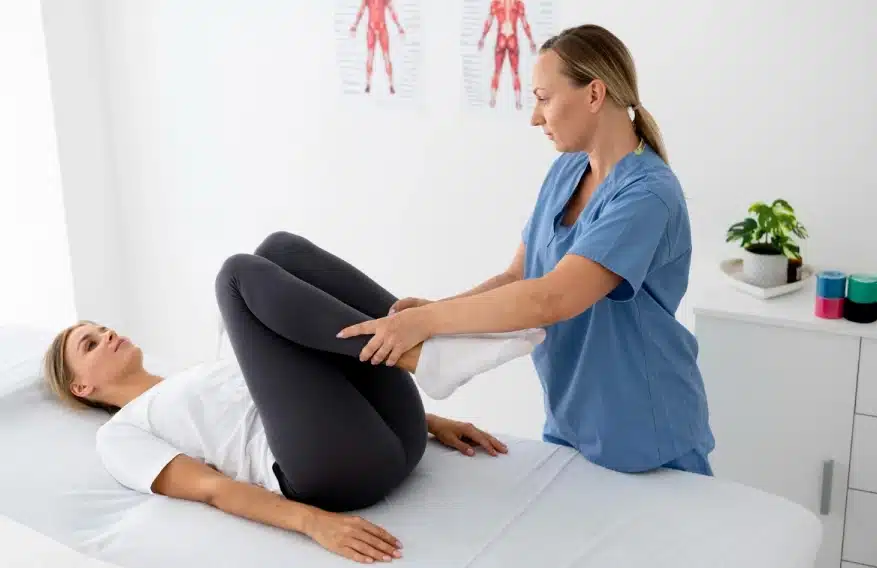
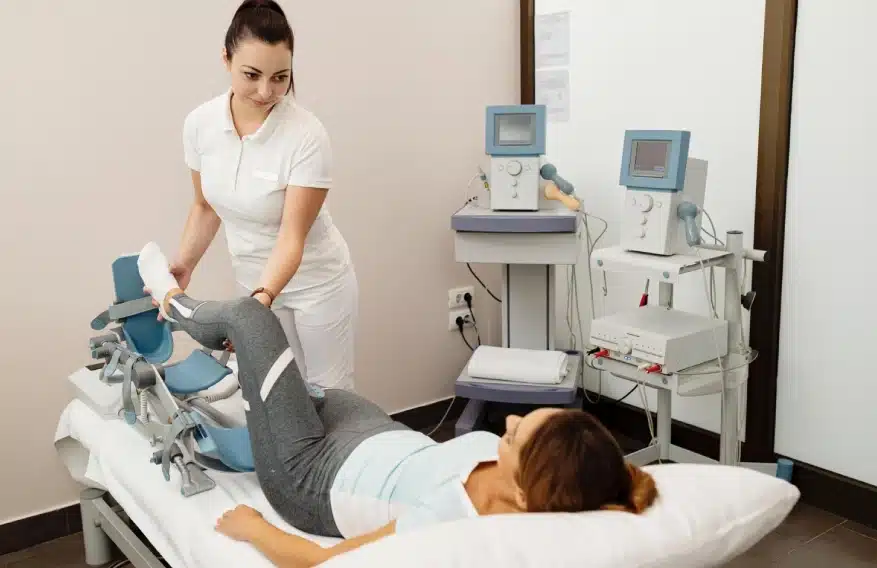
At FISIO, the current prenatal/postnatal service describes an assessment of symptoms, posture, musculoskeletal function and lifestyle followed by an individual rehabilitation plan.
A postpartum assessment may consider:
- Birth history
- C-section or vaginal-delivery recovery
- Current symptoms
- Pelvic-floor function
- Abdominal-wall function
- Back and hip movement
- Strength
- Daily activities
- Exercise history
- Return-to-exercise goals
Depending on the clinician’s scope, patient consent and the reason for referral, a specialist pelvic-health assessment may include more detailed examination.
Any intimate examination should only occur with appropriate clinical justification, informed consent, privacy and professional standards.
Red Flags: When Physiotherapy Is Not the First Priority
Some postpartum symptoms require medical or urgent assessment rather than routine physiotherapy.
Heavy Bleeding
Sudden or very heavy vaginal bleeding accompanied by symptoms such as faintness, dizziness or a rapid heartbeat may indicate postpartum haemorrhage and requires emergency care.
Possible Blood Clot
Pain, swelling or redness in one calf may indicate deep-vein thrombosis. Chest pain or difficulty breathing can indicate pulmonary embolism and requires urgent medical assessment.
Possible Infection
High temperature, worsening abdominal pain, abnormal-smelling bleeding or worsening wound symptoms require medical review.
Postpartum Preeclampsia
Persistent severe headache, visual changes, vomiting, shortness of breath or other concerning symptoms can occur with postpartum preeclampsia, which may develop even after delivery.
These symptoms should not be attributed to exercise, tiredness or musculoskeletal pain without appropriate medical assessment.
Postnatal Physiotherapy at FISIO Dubai
FISIO currently provides dedicated prenatal and postnatal rehabilitation and pelvic-floor physiotherapy services in Dubai. Its published approach includes:
- Individual assessment
- Core and pelvic-floor retraining
- Gentle progressive exercise
- Movement retraining
- Postural advice
- C-section-related rehabilitation where appropriate
For someone seeking post pregnancy physiotherapy, the treatment plan should reflect:
- Type of birth
- Stage of healing
- Current symptoms
- Medical clearance where required
- Previous activity level
- Functional goals
The aim should be to support a gradual return to comfortable daily activity—not to promise a fixed recovery date.
Frequently Asked Questions
When Can I Start Postpartum Physiotherapy?
There is no universal date. Gentle activity may begin within days after an uncomplicated vaginal delivery when you feel ready, while C-section or complicated births require individual medical guidance.
Do I Need to Wait Six Weeks?
Not necessarily for all movement or pelvic-floor exercises. Early gentle activity can often begin sooner. However, more intensive rehabilitation or assessment may be timed according to delivery type, symptoms, wound healing and medical advice.
Can I Do Pelvic-Floor Exercises Immediately After Birth?
Pelvic-floor exercises can generally begin early postpartum when comfortable. If you have a urinary catheter, wait until it is removed before beginning.
When Can I Start Physiotherapy After C-Section?
There is no single date. Early mobility begins during postoperative recovery, while progressive strengthening and scar-related treatment should follow healing and obstetric or surgical guidance.
Can Physiotherapy Help With Diastasis Recti?
Physiotherapy can assess abdominal-wall function and guide progressive core exercise and movement strategies. Some abdominal separation naturally improves during the early postpartum period.
Is Urine Leakage Normal After Having a Baby?
Urinary leakage can occur after pregnancy and childbirth, but persistent symptoms should not simply be ignored. Pelvic-floor muscle training and physiotherapy may be appropriate.
When Can I Start Running Again?
There is no universal return-to-running date. Higher-impact exercise should be introduced gradually once healing, pelvic-floor function, strength and symptoms are appropriate. NHS physiotherapy guidance commonly recommends avoiding high-impact exercise during roughly the first three months postpartum.
Can Postpartum Physiotherapy Guarantee Faster Recovery?
No. Recovery varies according to birth type, complications, symptoms, healing and individual health. Physiotherapy can provide assessment and rehabilitation but should not guarantee faster recovery.
Recovery Should Follow Your Body, Not a Generic Calendar
Postpartum recovery is not one standard six-week process.
A woman recovering from an uncomplicated vaginal delivery may begin gentle movement very early. Someone healing from C-section surgery, a significant tear or another complication may need a different progression.
The most useful postnatal physiotherapy Dubai plan therefore considers:
How you gave birth.
How you are healing.
What symptoms you have.
What activities you want to return to.
Pelvic-floor rehabilitation, abdominal strengthening, mobility and return to exercise can then progress according to those factors rather than an arbitrary deadline.
Experiencing pelvic-floor symptoms, abdominal concerns or difficulty returning to activity after childbirth? Book a postpartum physiotherapy assessment at FISIO in Dubai to discuss your birth history, current symptoms and recovery goals.
Medical disclaimer: This article provides general educational information and does not replace obstetric, medical or individual physiotherapy assessment. Seek urgent medical care for heavy bleeding, chest pain, breathing difficulty, suspected blood clot, severe or persistent headache with visual symptoms, signs of infection or other acute postpartum concerns.
Tags: